Interactive Fire Detection Systems
Infranet Information Technologies offers fiber optic solutions. Thanks to new-generation cabling technologies, it is built on fast and seamless communication.
Infranet was established as a result of numerous national and international experiences and accumulations, starting with the privatization of telecommunications services in Turkey.
Fire Detection Systems: Effective Solutions for Early Response
Fire detection and early warning systems provide an effective safety measure against fire hazards in commercial, residential and industrial buildings. With detectors, manual call points, sirens and other fire equipment, they provide early warning before a fire takes hold and enable rapid response. These systems are vital for detecting a fire hazard as quickly as possible and taking the necessary measures.
To design fire detection systems correctly, the relevant fire regulations and quality standards must be followed. In addition, for these systems to work properly they must be integrated with mechanical systems (dampers, pressurization fans, smoke extraction systems, etc.), and a fire scenario specific to each facility must be created.
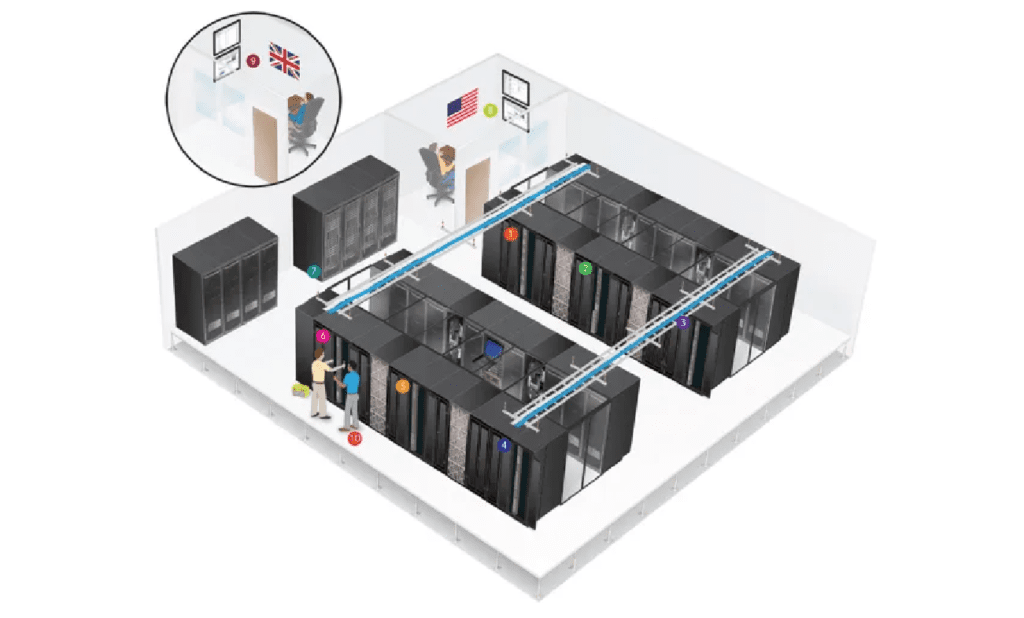
A fire detection and alarm system consists of detectors, manual call points, a control panel and warning devices. Detectors sense signs of fire such as smoke, heat, flame and gas and report them to the control panel. Manual call points allow a fire to be reported manually. The control panel evaluates the fire situation, activates the alarm system and makes the fire announcement. Depending on the fire scenario, it also controls various systems such as fire dampers, doors, ventilation systems and elevators.
Core Functions of Fire Detection Systems
In the event of a fire, a fire detection system must be able to perform the following functions:
Releasing electromagnetic door holders to close fire doors and other openings,
Activating pressurization devices for elevator shafts and stairwells,
Operating smoke control systems,
Controlling emergency lighting,
Opening security doors and turnstiles,
Preventing elevator use during a fire, or making elevators available to fire crews for evacuation,
Automatically notifying the local fire brigade, municipality, police and other authorities in case of fire.
Types of Fire Detection Systems
Fire detection systems are divided into two main categories: conventional and addressable systems. Today the most widely preferred systems are addressable systems.
Conventional Systems: These systems detect within a defined area (zone). Usually 20-25 devices can be connected to one zone, and when an alarm occurs these devices are checked one by one to locate the fire.
Addressable Systems: These systems assign a unique address to each detector, and every device (detector, call point, etc.) can be monitored by the control panel. The alarm and fault status of each device can be tracked; typically 128 devices can be connected on one loop.
Addressable systems are themselves divided into two:
Analog Addressable Systems: In these systems, the data measured by field devices (smoke level, temperature, etc.) is sent to the control panel, which evaluates it and generates alarm signals.
Interactive Addressable Systems: In these systems, field devices are programmed with microprocessors and gain the ability to collect data, evaluate it and make decisions. Interactive systems offer more sensitive detection and false-alarm prevention.
Infranet Fire Detection Solutions
With its experienced team, Infranet provides customized fire detection and safety solutions in many fields such as commercial premises, residences, warehouses, power plants, petrochemical facilities, mining and industrial plants. To minimize fire risk, it designs and implements solutions tailored to each customer.
Graphics-Based Central Monitoring and Control Software: High-Performance Solutions for Fire Safety
Graphics-based central monitoring and control software provides fast and easy access to all kinds of information through powerful graphical user tools. Dynamic graphic animations make it possible to grasp events instantly, enabling users to respond effectively. The software performs the functions of all fire alarm control panels and displays alarm and fault notifications in detail on floor plans in order of priority.
In addition, users can easily access room and device information, and the overall maintenance status of the system can be monitored by reporting the contamination levels of all addressable devices. This makes it possible to identify maintenance needs and set maintenance intervals. The software can also integrate with other security systems (CCTV, access control systems, etc.) and perform different functions according to defined scenarios.
Our Solutions:
Commercial Units
Residences
Warehouses
HVAC Plants
Power Plants
Petrochemical Facilities
Mining Sector
- Cable-Type Linear Heat Detection Systems
- Aspirating Smoke Detection Systems
- Gas Detection Systems
- Industrial Gas Detection Systems: Solutions and Tips That Improve Safety
- Gas Detection Systems in Hazardous and Explosive Environments
Linear heat detectors offer an effective solution in environments where conventional point-type fire detection is difficult to apply, such as confined spaces and harsh environmental conditions. Essentially, they continuously monitor the ambient temperature using conductor cables rated for a specific temperature. Working according to adjustable temperature values, they raise an alarm when the set heat level is exceeded. These systems can be used safely both indoors and outdoors and adapt to a wide range of applications.
Main areas of use include tunnels, escalators, aircraft hangars, cable trays, conveyor lines, cold storage facilities, heavy industry plants and historic buildings. Depending on how they work and their features, three different types of system can be applied.
Digital Cable Linear Heat Detection Systems
Digital cable-based systems carry out fire detection and control quickly and safely. Their key features are:
Can be connected to the fire panel via a digital module or integrated directly with an input module.
A single cable provides a detection length of 100 m to 3000 m.
Operates reliably under high-temperature conditions.
Required values can be chosen from different alarm temperatures (68°C, 78°C, 88°C, 105°C, 180°C, etc.).
Alarm points can be located by zone or by distance in meters.
After an alarm, the system cannot be reused.
Analog Cable Linear Heat Detection Systems
Analog cable systems work together with control units that detect temperature changes and have the following features:
Detects temperature changes via the controller.
Allows up to 500 m of cable per zone.
Can detect open-circuit and short-circuit faults.
The same cable can be set to five different alarm temperatures (64°C, 72°C, 79°C, 86°C, 100°C, etc.).
The alarm zone can be defined as a point or in meters.
Alarm and pre-alarm options can be defined between operating temperatures.
After an alarm, the system can be reused.
Fiber Cable Linear Heat Detection Systems
Fiber cable systems are a solution that provides high safety, especially over long distances. Their main features are:
Supports cable lengths of up to 16 km.
Works with Class A or Class B connections.
Can be divided into up to 256 different zones.
5 different alarm temperature levels can be selected for each zone.
Temperature values can be adjusted in areas at risk of freezing.
Provides high-temperature resistance.
ATEX certified for explosive atmospheres.
Supports the Modbus protocol.
Our Solutions:
Cable Trays
Conveyor Lines
Tunnels (Road and Rail)
Escalators
Transmission Lines
Cold Storage Facilities
Heavy Industry Plants
High-Sensitivity Air-Sampling Fire Detection Systems: Early Warning and High Security
These are systems that provide far more sensitive detection and earlier warning than conventional fire detection systems in areas where protection is critical. They consist of a fan mechanism that continuously draws in air from the room and highly sensitive detection sensors. Changes in the air are sampled through special pipes and analyzed by the sensors. Using specific algorithms to evaluate the chemical components in the air, the sensors detect smoke and generate a fire alarm. This technology prevents false alarms while significantly improving early detection of fires and the ability to respond.
With single-pipe, two-pipe and four-pipe options, the systems suit different area sizes (such as 250 m², 500 m², 1000 m²). The sensitivity of these detection systems is measured by light obscuration (% obs per meter), which expresses how much a beam of light is obscured over a distance of one meter. They are thousands of times more sensitive and faster than point detection systems.
Our Solutions:
Data Centers (IT Rooms)
Telecommunications Rooms
Battery Rooms
Historic and Wooden Buildings
Museums
Industrial Facilities
Flammable and Toxic Gas Detection Systems: A Critical Technology for Safety
Flammable and toxic gas detection systems consist of sensors, control panels and alarm devices. Detectors placed in the area continuously monitor the gas concentration. When a gas concentration reaching dangerous levels is detected, the system takes measures according to the programmed alarm scenario. For example, ventilation systems are activated, the gas supply is shut off or electrical connections are automatically cut.
According to their communication protocols, gas detection systems are divided into analog (4-20 mA, 0-20 mA, 0-10 V) and digital (HART, LON, Fieldbus, Profibus). It is very important for efficient operation that detectors and control panels use the same communication protocol.
The Importance of Gas Detection Systems
Because gas leaks and accumulations cannot be seen, it is critical to correctly position sensors suited to the chemical properties of the gas. Gases are divided into three main groups according to their risk:
1. Toxic Gases
Gases that harm human health when inhaled or touched are classified as “toxic gases”. Exposure limits for toxic gases are set by occupational safety standards and measured in ppm (parts per million). Some of the most common toxic gases are:
Hydrogen Sulfide (H₂S)
Carbon Monoxide (CO)
Carbon Dioxide (CO₂)
Sulfur Dioxide (SO₂)
Hydrogen Fluoride (HF)
Ammonia (NH₃)
Chlorine (Cl₂)
Ozone (O₃)
2. Flammable – Explosive Gases
Flammable and explosive gases create a risk of explosion by reacting chemically at a certain temperature and pressure. Lower (LEL) and upper (UEL) concentration limits have been defined for these gases. The most commonly encountered flammable gases are:
Hydrogen (H₂)
LPG and its components
Natural gas
Methane (CH₄)
Butane (C₄H₁₀)
Ethanol (C₂H₅OH)
Acetylene (C₂H₂)
Propane (CH₃CH₂CH₃)
Hexane
3. Inert (Neutral) Gases
Although inert gases are generally considered safe, they can displace oxygen and create a risk of suffocation (asphyxia). Particularly in laboratories, hospitals and NMR rooms, it must be ensured that inert gas leaks do not cause the oxygen level to fall below the critical level. The safe oxygen level should be %18-19 .
Gas Detection Sensors and Their Features
Sensors, the core component of gas detection systems, work on different principles depending on the type of gas to be detected and the ambient conditions.
1. Catalytic Sensor
Used to detect flammable gases.
Can measure up to 100% LEL.
Sensitivity decreases at low oxygen levels.
Lifetime is about 5 years, with a 5-10% loss of sensitivity per year.
Requires calibration every 6 months.
2. Infrared (IR) Sensor
Detects hydrocarbon gases.
Resistant to humidity, temperature changes and explosive gas concentrations.
Measures reliably at both low and high oxygen levels.
Has a fast response time (<10 s).
Annual calibration is recommended.
3. Electrochemical Sensor
Detects toxic gases such as carbon monoxide (CO), ammonia (NH₃) and chlorine (Cl₂).
Lifetime is between 2 and 3 years.
Also used for oxygen detection.
Ambient temperature and humidity changes can affect measurement accuracy.
Works with a response time of 30-60 seconds.
Requires oxygen for detection.
4. Semiconductor Sensor
Used in household gas detectors.
Not recommended for industrial facilities.
Sensitive to various gases and can cause false alarms.
Even water vapor can trigger an alarm.
Not widely preferred in industry today.
5. Thermal Conductivity Sensor
Measures by comparing the thermal conductivity of the gas with that of air.
Effective in detecting high concentrations of gas.
Cannot be used at low concentrations or for gases whose conductivity is close to that of air.
Maintenance and Calibration of Gas Detection Systems
For gas detectors to operate correctly and reliably, maintenance must be carried out at regular intervals. Recommended maintenance processes:
Physical inspection every 3 months
Calibration test every 6 months
Sensor replacement every 1 to 5 years depending on sensor type
Conclusion
Flammable and toxic gas detection systems have a wide range of uses, from industrial facilities to data centers and from hospitals to laboratories. Choosing the right sensor, periodic maintenance and configuring the system according to its communication protocols minimize gas-related risks and keep businesses safe.
Industrial Gas Detection Systems: Solutions and Tips That Improve Safety
Gases and vapors produced during manufacturing in industrial facilities can create serious hazards if they reach their lower explosive limits. Air, an ignition source and explosive gas mixtures — the elements of the explosion triangle — can lead to industrial accidents. Therefore, continuously monitoring and controlling gases is vital for both human health and property safety.
Why Are Gas Detection Systems Important?
The main purpose of gas detection systems is to identify a potential accident in advance and provide early warning as soon as a leak begins. The choice of system depends on the structure of the industrial facility and which gases need to be monitored. Selecting suitable gas detection devices, placing sensors correctly and taking ambient temperature and airflow direction into account increase the effectiveness of these safety systems. Regular maintenance and calibration of gas detection sensors is also very important.
Factors to Consider When Choosing a Gas Detection System
The factors to consider when choosing a gas detection system can be listed as follows:
Gas Type and Sensor Selection: The types of gas to be detected must be identified and suitable sensors selected for them.
Industrial Facility Structure: The structure of the facility, the ambient temperature and the airflow direction play an important role in positioning detectors.
Number and Placement of Detectors: Correct placement of detectors is very important. Points close to the leak source should be chosen, keeping in mind that gas spreads quickly.
Maintenance and Calibration: Regular maintenance intervals should be set for the sensors, with a visual physical inspection every 3 months. Calibration checks are required every 6 months.
Placement and Installation of Gas Detectors
Correct placement and installation of gas detectors is critical for timely detection. The following factors should be considered when choosing the installation location:
Gas Source: Areas such as the gas outlet, equipment, tanks and pipelines should be taken into account.
Gas Density: Whether the gas is heavier or lighter than air, and where it may accumulate, should be determined.
Area of Use: Detector placement varies depending on whether the leak area is occupied or unoccupied.
Gas Condition: It should be assessed whether the gas naturally exists in the environment and whether existing concentrations reach the alarm level.
Suitability of the Gas Detection System for Environmental Conditions
Taking detector placement and environmental conditions into account, the following factors should also be considered:
Gases Lighter and Heavier Than Air: Gases lighter than air (methane, ammonia, etc.) should be detected at high levels, and gases heavier than air (butane, sulfur oxide, etc.) at low levels.
Airflow Direction and Wind Effect: The natural behavior of the gas, wind direction and air movement can also affect detector placement.
Protection and Climate Conditions: Detectors should be installed in a suitable location to protect them from external factors such as rain and standing water.
Detector Placement at High-Pressure Leak Points
Because gas clouds can form from leak points under high pressure, gas detectors in such areas should be placed at greater distances. This is necessary to better identify the gas dispersion area and the zones that may pose a risk.
Conclusion: The Effectiveness of Industrial Gas Detection Systems
The effectiveness of gas detection systems can be increased through correct detector placement, sensor selection, regular maintenance and calibration. Thanks to early detection of possible gas leaks, these systems play a critical role in ensuring safety in industrial facilities. Correct installation of detectors, appropriate alarm levels and consideration of environmental conditions reduce explosion risks and create a safe working environment.
Toxic and Explosive Gas Detection Systems: Safe Industrial Solutions
Toxic and explosive gas detection systems are preventive systems used in industrial facilities to protect lives and prevent major financial losses. In addition to detecting explosive and toxic gases, these systems enable safe monitoring of the environment and identification of hazards in advance.
What Is an Explosive Atmosphere and a Hazardous Area?
Under normal atmospheric conditions, an environment where air is mixed with gas, vapor, mist or dust is called an “Explosive Atmosphere”. Areas where explosive gas or dust atmospheres are present or expected to be present are called “Hazardous Areas”. These areas require special measures for the selection and installation of suitable electrical equipment. Hazardous areas must be classified according to their level of risk.
Hazardous Area Classification
Hazardous areas are generally assessed using two different classification methods: the European & IEC method and the North American method. In Turkey, the TSE 3491 EN 60079-10 standard applies, and this standard is known as the ATEX (ATmospheres Explosives) directive.
The information required to select electrical equipment for hazardous areas is as follows:
Class of the hazardous area
Temperature class of the relevant gas or vapor
Group or subgroup of the electrical equipment
Ambient temperature and external influences
Based on this information, the minimum requirements for the devices to be used are determined.
Hazardous Area Classes and Devices
Devices used in industrial areas are coded and classified according to the risk classes of explosive gas and dust atmospheres:
Zone 0: Area where an explosive gas atmosphere is present continuously or for long periods (ATEX Category 1)
Zone 1: Area where a gas atmosphere is occasionally present during normal operation (ATEX Category 2)
Zone 2: Area where a gas atmosphere is unlikely to occur, and if it does, persists only for a short time (ATEX Category 3)
Zone 20: Area where combustible dust is continuously present as a cloud
Zone 21: Area where combustible dust may occasionally form an explosive atmosphere
Zone 22: Area where combustible dust is unlikely to form an explosive atmosphere, but may do so for a short time
Device Classifications and Labeling
Devices are coded according to the risk class of the hazardous area using symbols on their labels. These labels also appear in the device catalogs and make choosing the right device easier.
Device Selection and Installation
Device selection and installation are critical factors that directly affect the success of the system. Correct device selection ensures that hazardous gases and dusts are detected accurately. However, over-detection or overlooking some areas can lead to an unbalanced and faulty system design. Therefore, possible types and conditions of leaks must be identified in advance and the system designed accordingly.
Design of Hazardous Gas Detection Systems and Its Importance
A detailed preliminary study is essential before designing a hazardous gas detection system. Factors to consider during design include the type of gas, its density, its behavior and the ambient conditions. A correct design guarantees that the system works effectively and that safety is ensured.
Our Solutions: Advanced Gas Detection for Industrial Safety
Our solutions for toxic and explosive gas detection systems aim to increase safety in industrial facilities. Our solutions include:
ATEX and SIL Certified System Solutions: Safe systems that can be used in explosive atmospheres.
Gas Detection Solutions Compliant with the Seveso Directives: Risk reduction in chemical plants.
Calibration and Maintenance Services: Regular maintenance and calibration of detection systems.
Power Plants and Petrochemical Facilities: Safe gas detection solutions in high-risk industrial areas.
Military Facilities: Special solutions for sensitive security requirements.
Write to us. Our experienced experts will contact you to arrange a site survey appointment.
Contact Form DemoΔ
NameSurnamePhone NumberE-mailYour MessageSendOur Business Partners
Relationships with business partners are important to Infranet for successful collaboration and long-term success.









We Offer Original Solutions in the Field of Systems and Networks.
Take Advantage of Our Free Site Survey and Feasibility Service
Contact Us!